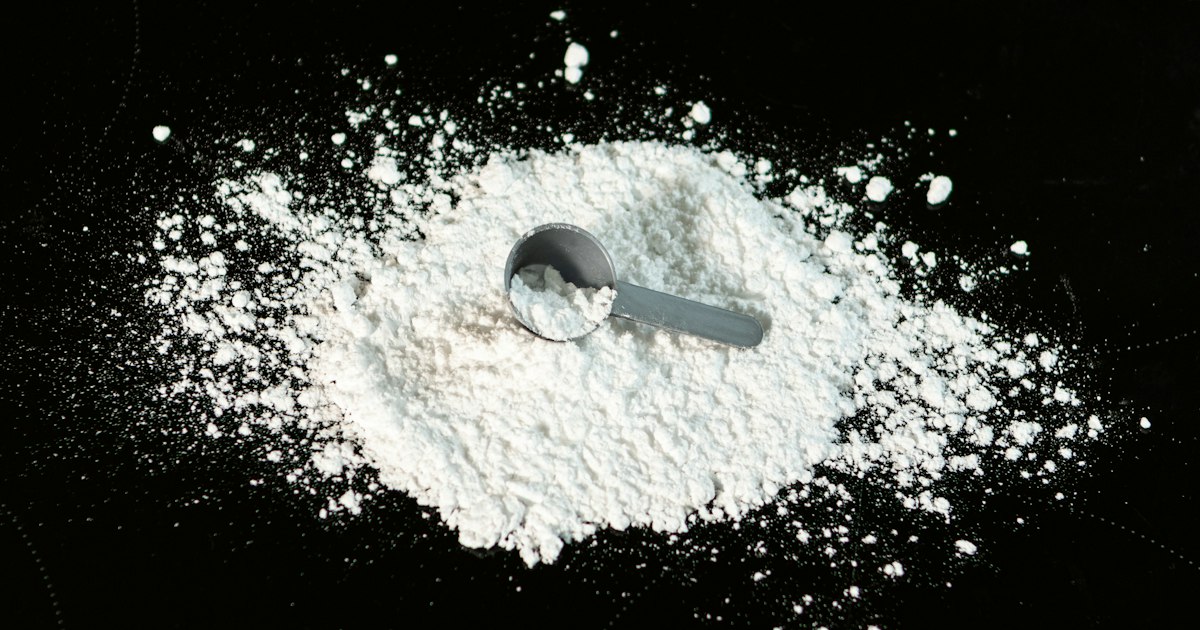
Exogenous ketones: what they are and how they work

Exogenous ketones are supplements that supply the body with ketone bodies “from the outside,” without fasting or a ketogenic diet. Over the past decade they have moved from the labs of military and university researchers to the shelves of sports nutrition stores. The editorial team explains what exactly such products contain, how they are metabolized, and why their real-life effect is more modest than advertising promises.
What ketone bodies are and where they come from
Ketone bodies are three small molecules: acetoacetate, beta-hydroxybutyrate (BHB), and acetone. The liver produces them from fatty acids when the body is low on glucose and insulin: during prolonged fasting, a strict low-carbohydrate diet, or very long physical exertion. Acetone forms in small amounts and is mostly eliminated through the breath, so the first two are the ones that matter as an energy source.
Evolutionarily, ketosis is a survival mechanism. The brain cannot directly oxidize long-chain fatty acids, and liver glycogen stores are depleted within a day or two of fasting. The classic works of George Cahill showed that during prolonged starvation ketone bodies provide a significant part of the brain's energy needs, which makes it possible to preserve muscle protein that would otherwise go toward glucose synthesis.
In an ordinary person eating a mixed diet, blood BHB is low — usually tenths of a millimole per liter. After overnight fasting it rises somewhat, and on a ketogenic diet it stabilizes in a range called “nutritional ketosis,” roughly 0.5 to 3 mmol/L. Much higher levels occur in diabetic ketoacidosis — a pathological condition that has nothing in common with physiological ketosis.
The key difference between endogenous and exogenous ketosis lies in the context. When the liver produces ketones, it happens against a background of low insulin, depleted glycogen, and active fat breakdown. When ketones are drunk, the rest of metabolism may remain “carbohydrate-based,” and the body responds to them differently.
What types of exogenous ketones exist
Several groups of products appear on the market and in studies. The most common in retail are BHB salts: a beta-hydroxybutyrate molecule bound to sodium, potassium, calcium, or magnesium. They are relatively cheap, have a salty-bitter taste, and usually contain a mixture of two mirror forms — D- and L-BHB.
The second group is ketone esters. The most studied of these is the monoester (R)-3-hydroxybutyl (R)-3-hydroxybutyrate, developed at the University of Oxford. In the gut and liver it is broken down into D-BHB and 1,3-butanediol, which in turn is also converted into ketones. Esters give a much higher rise in blood BHB than salts, but have a very harsh taste and cost more.
The third group is ketone “precursors”: free 1,3-butanediol and medium-chain triglycerides (MCT). They are not themselves ketones, but the liver partially converts them into ketone bodies. The effect of MCT on BHB levels is moderate and depends on the composition of the oil, which we cover in detail in a separate article.
| Product type | Active form | Rise in blood BHB | Features |
|---|---|---|---|
| BHB salts | Often a D/L-BHB mixture + minerals | Moderate | Significant mineral load, milder taste |
| Ketone monoester | D-BHB + 1,3-butanediol | High | The most data in studies, harsh taste |
| Ketone diesters | Acetoacetate + butanediol | High | More frequent gastrointestinal symptoms |
| 1,3-butanediol, MCT | Ketone precursors | From low to moderate | Depends on liver metabolism |
For the consumer it is important to distinguish these categories, because ester study results are often incorrectly extended to salts, which are much weaker in action. The review by Stubbs and colleagues (2017) directly showed that, for the same amount of BHB, an ester creates a higher and faster concentration of D-BHB in the blood than a salt mixture.

The path of ketones through the body
After oral intake, BHB is quickly absorbed in the gut. Peak blood concentration usually occurs after about 30–60 minutes, after which the level gradually declines over several hours. In the study by Clarke and colleagues (2012) with a ketone monoester, the rise in BHB was dose-dependent, and the product was generally well tolerated by healthy adults.
From the blood, BHB enters cells via monocarboxylate transporters. In the mitochondria it is oxidized to acetoacetate, then converted to acetyl-CoA and enters the Krebs cycle. The key enzyme of this pathway — succinyl-CoA:3-ketoacid-CoA transferase (SCOT) — is active in the heart, muscles, and brain, but absent in the liver. That is why the liver produces ketones but does not use them itself.
An important detail concerns the L-form of BHB, which is present in many salt products. It is oxidized much more slowly than the natural D-form, circulates in the blood longer, and, according to current understanding, provides little energy. So a “10 g BHB” label on a racemic salt does not mean 10 g of “working” ketones.
Raising blood ketone levels in itself inhibits their production by the liver and slightly lowers glucose and free fatty acid levels. This is a kind of feedback system: the body perceives ketones as a signal of sufficient energy and adjusts metabolism accordingly.
Ketones as fuel and as signaling molecules
The energy role of ketones is obvious: it is a water-soluble fuel that is easily transported by the blood and does not require the carnitine shuttle to enter the mitochondria. Per unit of oxygen consumed, ketones yield slightly more ATP than fatty acids, which prompted researchers to hope for improved efficiency of the heart and muscles.
The second role, actively studied in recent years, is signaling. The review by Newman and Verdin (2017) describes BHB as a metabolite that affects gene expression through inhibition of histone deacetylases, and also interacts with receptors on the cell surface. In experiments on animals and cells, BHB reduced activation of the NLRP3 inflammatory complex (Youm et al., 2015).
In addition, exogenous ketones affect appetite hormones and glucose. In controlled studies, a ketone ester lowered ghrelin levels and subjective hunger, and also softened the rise in glucose after a standard glucose tolerance test. These effects are short-term and studied in small groups of healthy people.
- Energy effects:additional fuel for the heart, muscles, and brain, partial glucose sparing.
- Metabolic effects:temporary reduction of glucose, free fatty acids, and the body's own ketogenesis.
- Signaling effects:influence on inflammation, gene expression, and appetite — mostly data from preclinical and small studies.
The editorial team emphasizes: the signaling properties of BHB are a promising direction of science, but so far they have not translated into proven clinical benefits for healthy people or athletes.
What this means for an athlete
Sport's interest in ketones surged sharply after the publication by Cox and colleagues (2016) in Cell Metabolism: in part of the experiments, cyclists who drank a ketone ester together with carbohydrates covered a slightly greater distance in a 30-minute test than after a carbohydrate-only drink. The work sparked a wave of expectations that subsequent studies substantially cooled.
The systematic review and meta-analysis by Valenzuela and colleagues (2020) found no overall improvement in physical performance after acute intake of ketone supplements. Some studies even showed a worsening of results, particularly due to gastrointestinal discomfort. More on this is in our article on the evidence base for ketones for athletes.
The most interesting effects today appear to be not the acute but the recovery effects. Some works studied taking an ester after workouts during periods of heavy load and recorded fewer signs of overtraining, but these data come from small groups and require confirmation.
In practice this means that exogenous ketones are not a replacement for carbohydrates as the main fuel for intense work. They remain a niche experimental tool, and their usefulness must be assessed taking into account price, tolerability, and specific goals.
Editorial conclusions
Exogenous ketones are a way to quickly and temporarily raise blood beta-hydroxybutyrate without fasting or dieting. Salts and esters differ substantially in strength of action, composition, and tolerability, so they cannot be assessed as the same product.
The biochemistry of ketones is well studied: it is an effective fuel for the heart, muscles, and brain, as well as molecules with interesting signaling properties. However, transferring these facts to athletic performance has not yet received convincing confirmation.
For most people who train, the priorities remain basic nutrition, adequate carbohydrates, and recovery. Ketones can be considered a subject of cautious experiment, not a mandatory supplement.
The editorial team also recommends reading our articles “The benefits of exogenous ketones for athletes: the evidence base,” “Side effects of exogenous ketones,” and “MCT oil: what it is and how it works.”
References
- Cahill GF Jr. Fuel metabolism in starvation. Annu Rev Nutr. 2006;26:1–22.
- Puchalska P, Crawford PA. Multi-dimensional roles of ketone bodies in fuel metabolism, signaling, and therapeutics. Cell Metab. 2017;25(2):262–284.
- Stubbs BJ, Cox PJ, Evans RD, et al. On the metabolism of exogenous ketones in humans. Front Physiol. 2017;8:848.
- Clarke K, Tchabanenko K, Pawlosky R, et al. Kinetics, safety and tolerability of (R)-3-hydroxybutyl (R)-3-hydroxybutyrate in healthy adult subjects. Regul Toxicol Pharmacol. 2012;63(3):401–408.
- Newman JC, Verdin E. β-Hydroxybutyrate: a signaling metabolite. Annu Rev Nutr. 2017;37:51–76.
- Youm YH, Nguyen KY, Grant RW, et al. The ketone metabolite β-hydroxybutyrate blocks NLRP3 inflammasome-mediated inflammatory disease. Nat Med. 2015;21(3):263–269.
- Cox PJ, Kirk T, Ashmore T, et al. Nutritional ketosis alters fuel preference and thereby endurance performance in athletes. Cell Metab. 2016;24(2):256–268.
- Valenzuela PL, Morales JS, Castillo-García A, Lucia A. Acute ketone supplementation and exercise performance: a systematic review and meta-analysis of randomized controlled trials. Int J Sports Physiol Perform. 2020;15(3):298–308.
Andriy Melnyk
A strength-sports coach and author of programs for beginner and intermediate levels. Writes about training planning.